PTSD Awareness Month • 2026
-
Monday, June 1, 2026 12:01 AM until Wednesday, July 1, 2026 12:01 AM
-
United States (map)
The National Center for PTSD has designated June National PTSD awareness month.
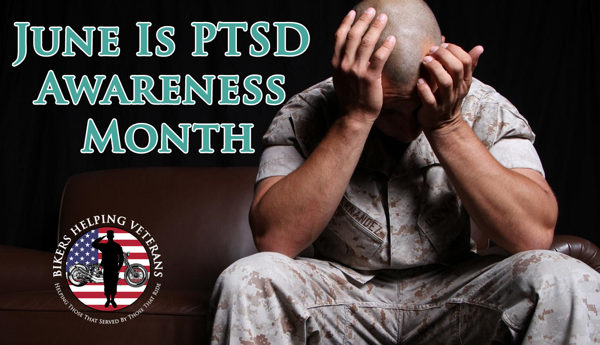
Post-Traumatic Stress Disorder (PTSD) gained notoriety during the Vietnam war in the 1970's when the phrase was coined, but symptoms were being detected in military service men back during the second World War where people classified it as “shell shock.” It was not until the 1980’s when it was classified as a diagnosis. We posted a little history below.
Shell Shock
In 1919, President Wilson proclaimed November 11th as the first observance of Armistice Day, the day World War I ended. At that time, some symptoms of present-day PTSD were known as "shell shock" because they were seen as a reaction to the explosion of artillery shells. Symptoms included panic and sleep problems, among others. Shell shock was first thought to be the result of hidden damage to the brain caused by the impact of the big guns. Thinking changed when more soldiers who had not been near explosions had similar symptoms. "War neuroses" was also a name given to the condition during this time.
Battle Fatigue or Combat Stress Reaction (CSR)
In World War II, the shell shock diagnosis was replaced by Combat Stress Reaction (CSR), also known as "battle fatigue." With long surges common in World War II, soldiers became battle weary and exhausted. Some American military leaders, such as Lieutenant Gen. George S. Patton, did not believe "battle fatigue" was real. A good account of CSR can be found in Stephen Crane's Red Badge of Courage, which describes the acute reaction of a new Union Army recruit when faced with the first barrage of Confederate artillery.
Development of the PTSD Diagnosis
In 1952, the American Psychiatric Association (APA) produced the first Diagnostic and Statistical Manual of Mental Disorders (DSM-I), which included "gross stress reaction." This diagnosis was proposed for people who were relatively normal, but had symptoms from traumatic events such as disaster or combat. A problem was that this diagnosis assumed that reactions to trauma would resolve relatively quickly. If symptoms were still present after six months, another diagnosis had to be made.
Despite growing evidence that trauma exposure was associated with psychiatric problems, this diagnosis was eliminated in the second edition of DSM (1968). DSM-II included "adjustment reaction to adult life" which was clearly insufficient to capture a PTSD-like condition. This diagnosis was limited to three examples of trauma: unwanted pregnancy with suicidal thoughts, fear linked to military combat, and Ganser syndrome (marked by incorrect answers to questions) in prisoners who face a death sentence.
In conclusion
Our men and women selflessly fight for our freedom and need to be our number one priority when they come home. Post Traumatic Stress Disorder can happen to anyone, and for those that are suffering need to know it is not a weakness, and it is not something you have to live with. If you or someone you know is suffering from PTSD, don’t hesitate to get help. Learn more at National Center for PTSD
Donate @ Bikersinc.org

Sponsorship @ Bikersinc.org